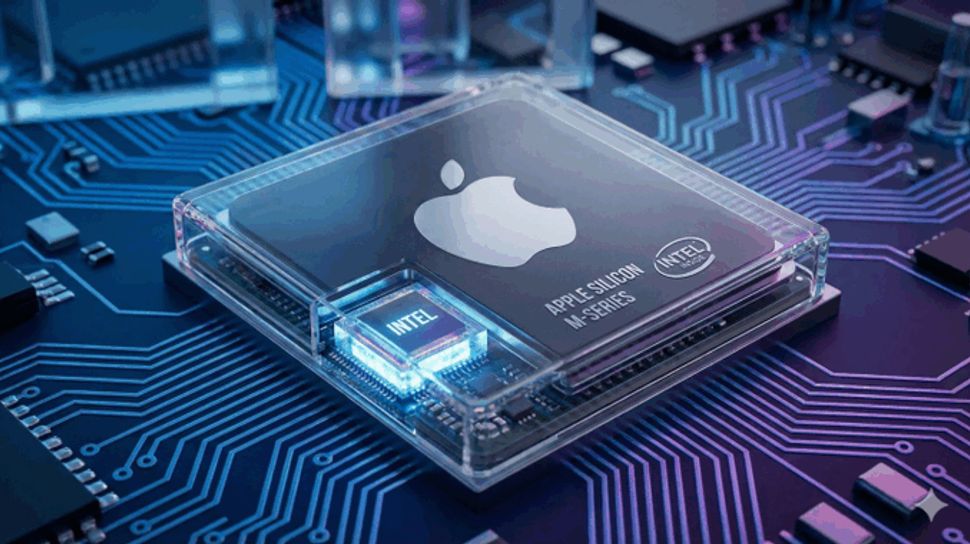
Conceptual image of a semiconductor packaging facility. Apple is in talks with CG Semi for its new OSAT plant in Sanand, Gujarat, which could package display chips for iPhones.
A Strategic Leap in Apple's India Manufacturing Journey
In a move that signals a significant deepening of its manufacturing partnership with India, Apple Inc. is reportedly in preliminary discussions with Indian semiconductor company CG Semi to handle the assembly and packaging of iPhone chips within the country for the first time. This exploration represents a major step up the value chain for Apple's operations in India, which have so far focused predominantly on final device assembly.
The talks, described as "exploratory conversations," are centered around CG Semi's under-construction Outsourced Semiconductor Assembly and Test (OSAT) facility in Sanand, Gujarat. While the specific chips to be packaged are not yet finalized, sources indicate they will likely be display driver integrated circuits (DDICs), crucial components that control the pixels on iPhone OLED screens.
The Deal and The Uphill Climb
CG Semi, owned by the Murugappa Group, is building its OSAT facility with an investment of approximately ₹7,600 crore (about $910 million) over five years, supported by both central and state governments under India's Semiconductor Mission. The first phase (G1) of the plant, inaugurated in August 2025, is designed to handle complete chip assembly, packaging, testing, and post-test services with a capacity of about 500,000 units per day. Commercial production is targeted for 2026.
However, sources close to the matter caution that this is just the "beginning of an uphill climb" for CG Semi. To secure a deal, the company must pass Apple's famously stringent quality and consistency standards. "Apple is already in talks with several companies for a number of other supply chain functions, and very few will end up on their supplier list," one source noted. Success would not only be a win for CG Semi but a major validation of India's technical capabilities in the high-precision semiconductor packaging sector.
Context: India's Rapid Rise in Apple's Supply Chain
Apple's Manufacturing Evolution in India
Apple has been systematically moving deeper into India's manufacturing value chain.
This potential chip packaging deal is the latest step in Apple's multi-year strategic pivot to India, accelerated by geopolitical tensions and trade uncertainties. The company has already achieved remarkable scale in Indian device assembly:
- Apple reportedly assembled $22 billion worth of iPhones in India in the 12 months ending March 2025, a nearly 60% year-over-year increase.
- Suppliers have created approximately 350,000 jobs in the country, including 120,000 direct roles.
- Foxconn, Tata Electronics, and Pegatron now operate multiple iPhone assembly plants, with Apple aiming to make the majority of U.S.-bound iPhones in India by late 2026.
The supply chain around these assembly hubs has also expanded dramatically to include 45 companies, from large domestic firms like Tata Electronics to smaller component specialists.
The Bigger Picture: India's Semiconductor Mission Gains Momentum
Apple's interest in CG Semi is not occurring in a vacuum. It is a key data point in the ambitious India Semiconductor Mission (ISM), launched in 2021 to build a full domestic semiconductor ecosystem. The ISM has approved ten major projects, including a massive $10 billion fabrication plant by Tata Electronics and a $2.75 billion assembly and test facility by U.S. giant Micron Technology in Gujarat.
Gujarat has emerged as a particular frontrunner, attracting investments due to its first-mover policy, the massive Dholera Special Investment Region industrial cluster, and the catalytic effect of Micron's investment. Other states like Tamil Nadu, Karnataka, and Uttar Pradesh are also competing aggressively for semiconductor projects.
Recent Milestones in India's Chip Journey
Analysis: Why This Move Matters & The Challenges Ahead
Strategic Impact for Apple
- Supply Chain Resilience: Further diversifies a critical component (chip packaging) away from concentration in East Asia.
- Cost Mitigation: Could help manage pressures from potential tariffs on Chinese imports.
- Market Alignment: Strengthens Apple's "Made in India" credentials in one of its fastest-growing major markets.
For India, sealing a deal with Apple would be a landmark achievement, proving its capability in advanced electronics manufacturing beyond assembly. It would attract more global firms to its semiconductor ecosystem. Industry analyst Prabhu Ram noted that as India matures into a vital node in the global electronics supply chain, Apple could benefit from "enhanced resilience and diversification".
However, significant challenges remain. India's domestic value addition in electronics, while growing, still relies heavily on imported components due to the industry's globalized nature. Building the deep technical expertise and consistent high yields required for Apple's supply chain is a formidable task for any new entrant.
Conclusion: A Tentative Step Toward a New Manufacturing Era
The discussions between Apple and CG Semi are still in their earliest stages, and there is no guarantee they will result in a supplier agreement. If they do, however, it would mark a watershed moment—not just for Apple's manufacturing strategy, but for India's aspirations to become a true global hub for high-tech electronics.
This move represents the logical next frontier in Apple's deepening commitment to India: moving from assembling the whole device to manufacturing some of its most sophisticated internal components. It underscores a broader, irreversible trend of supply chain diversification away from China, with India positioned as a primary beneficiary. The coming months will reveal whether CG Semi can scale the "uphill climb" to meet Apple's gold standard.