💥 Ecosystem Barrier Broken
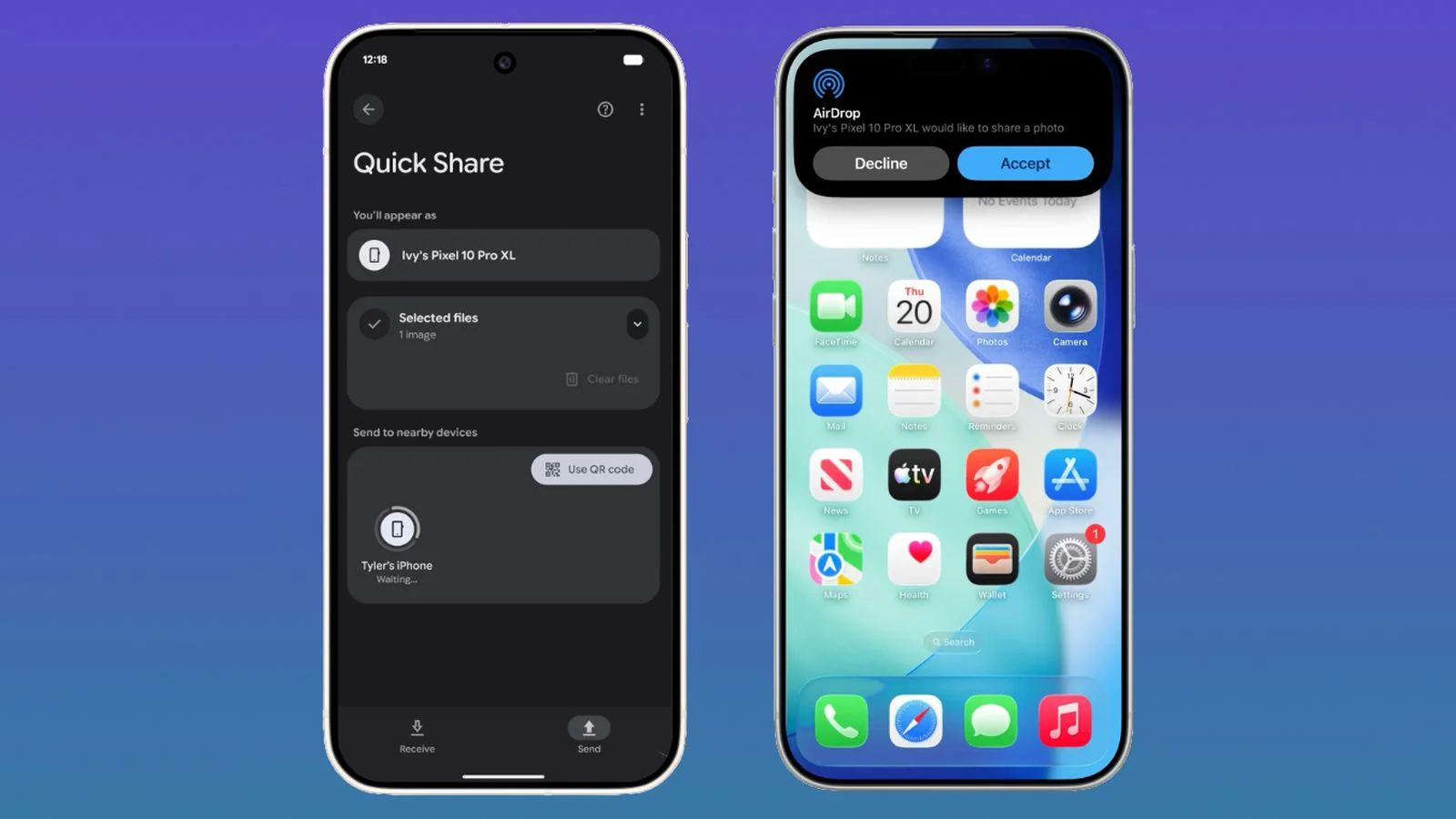
Google has achieved what many thought impossible: breaking through Apple's walled garden to enable direct file sharing between Android and iOS devices. In a surprise announcement that shook the tech world, Google revealed that Quick Share now works with Apple's AirDrop, marking the first successful reverse-engineering of Apple's traditionally closed ecosystem by a major competitor .
How to Use Quick Share with AirDrop
The AirDrop Barrier Finally Broken
In a move that represents one of the most significant interoperability breakthroughs in recent mobile technology history, Google has successfully enabled Android's Quick Share to communicate directly with Apple's AirDrop system . This development effectively breaks down one of the last major barriers between Android and iOS ecosystems, allowing for seamless file sharing between platforms that previously required workarounds or third-party applications.
What makes this achievement particularly remarkable is that Google accomplished this without Apple's cooperation or involvement. According to Google's statements to multiple publications, the company "accomplished this through our own implementation" . This independent approach marks a significant departure from previous cross-platform collaborations where Apple and Google worked together on features like RCS messaging and unknown tracker alerts.
Technical Breakthrough: Reverse-Engineering AirDrop
| Implementation Method | Independent reverse-engineering of AirDrop's AWDL protocol |
| Programming Language | Rust (memory-safe language endorsed by NSA/CISA) |
| Connection Type | Direct peer-to-peer, no server routing |
| Security Validation | Internal testing + third-party penetration testing by NetSPI |
| Current Limitation | Requires AirDrop "Everyone for 10 minutes" mode |
Google's technical achievement involved reverse-engineering Apple's proprietary Apple Wireless Direct Link (AWDL) protocol that powers AirDrop . While AWDL itself is proprietary, it relies on open standards like Bluetooth and Wi-Fi Direct, making unauthorized support theoretically possible. Google's implementation represents the first successful reverse-engineering of Apple's traditionally closed ecosystem by a major competitor.
The company built the interoperability layer using Rust, a memory-safe programming language that has been recognized by security agencies worldwide as the industry benchmark for building secure systems . This choice was deliberate, driven by the unique security challenges of cross-platform communication that demanded the most robust protections for memory safety.
Enterprise-Grade Security Implementation
Google's security-first approach included comprehensive testing and validation processes that rival enterprise software development standards. The company conducted internal threat modeling, privacy reviews, and red team penetration tests before engaging independent security experts for additional validation .
Unlike cloud-based file sharing services, Google's implementation maintains direct peer-to-peer connections throughout the transfer process. The feature operates without routing data through servers, and shared content is never logged , ensuring that sensitive files remain completely private during cross-platform transfers.
Current Limitations and Future Potential
| Device Availability | Currently exclusive to Pixel 10 series |
| AirDrop Mode | Requires "Everyone for 10 minutes" instead of "Contacts Only" |
| Expansion Plans | Google plans to bring to more Android devices |
| Future Goals | Hope to work with Apple for "Contacts Only" mode support |
The current implementation requires iPhone users to set their AirDrop visibility to "Everyone for 10 minutes" rather than the more secure "Contacts Only" mode . Google has explicitly stated that they "welcome the opportunity to work with Apple to enable 'Contacts Only' mode in the future" , suggesting this is just the first step in their cross-platform sharing ambitions.
Initially, the feature is exclusive to Google's Pixel 10 series smartphones, serving as a strategic differentiator for Google's flagship devices . However, Google has confirmed plans to expand the functionality to more Android devices in the future, though no specific timeline has been announced for when Samsung Galaxy devices or other popular Android manufacturers will receive the capability.
Industry Implications and Apple's Response
This development arrives at a critical time when regulatory pressure on big tech's ecosystem lock-in practices is intensifying globally . Google's successful interoperability implementation demonstrates that technical barriers can be overcome with sufficient engineering investment, potentially influencing future regulatory discussions about mandating cross-platform compatibility standards.
The situation bears some parallels to the 2023 Beeper incident, where Apple successfully shut down a third-party attempt to bring iMessage to Android . However, industry observers note that Google is a much larger company than Beeper, and now that the feature has been publicly announced and launched, it would be more difficult for Apple to oppose it without facing significant scrutiny.
As one MacRumors commenter noted: "Why is anyone here *against* interoperability like this? I've so often wanted to AirDrop something to my Android friends and been frustrated that it's not possible. This is a GOOD thing with zero downside to us users" . This sentiment reflects growing user frustration with artificial barriers between platforms.
Real-World Impact for Users
For the first time, Android and iPhone users can share photos, videos, documents, and other files directly between devices without relying on email, messaging apps, or cloud services . This eliminates a significant point of friction that has traditionally made mixed-device environments cumbersome, particularly in social, educational, and professional settings where quick file sharing is essential.
The bidirectional nature of this compatibility is particularly significant - Apple device owners can send files to Pixel phones as well, creating true two-way interoperability . This balanced approach ensures that neither platform's users are relegated to second-class status in the sharing experience.