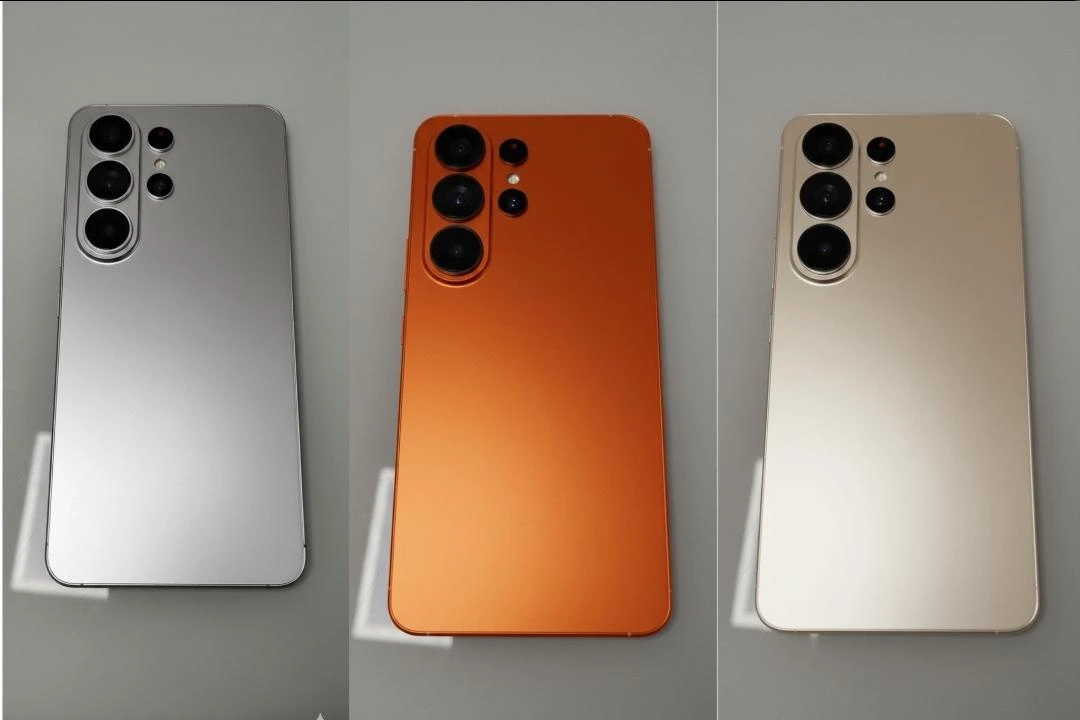
Detailed specifications for Samsung's upcoming Galaxy S26 series have surfaced, revealing the company's memory strategy for its 2026 flagship lineup. According to multiple reliable sources, Samsung will maintain 12GB RAM as standard across most models while introducing significantly faster LPDDR5X memory technology .
Key Memory Specifications
RAM Technology
LPDDR5X @ 10.7Gbps
Base RAM
12GB Across Series
Storage Options
256GB, 512GB, 1TB
Premium Variant
16GB/1TB (China)
Detailed Model Breakdown
| Model | RAM Options | Storage Options | Memory Speed |
|---|---|---|---|
| Galaxy S26 | 12GB | 256GB, 512GB | LPDDR5X 10.7Gbps |
| Galaxy S26+ | 12GB | 256GB, 512GB | |
| Galaxy S26 Ultra | 12GB (Global) 16GB (China 1TB) |
256GB, 512GB, 1TB |
Regional Strategy Revealed
Samsung appears to be continuing its regional differentiation strategy with the S26 series. While most global markets will receive the S26 Ultra with 12GB RAM across all storage tiers, select markets including China will get an exclusive 16GB RAM variant paired with 1TB storage .
Market-Specific Variations
This regional approach allows Samsung to compete aggressively in markets like China where local manufacturers typically offer 16GB RAM as standard on flagship devices, while maintaining cost efficiency in other regions where 12GB RAM remains competitive .
Memory Technology Upgrade
The most significant improvement in the S26 series' memory subsystem comes in the form of speed rather than capacity. All models will feature LPDDR5X RAM running at 10.7Gbps, representing a substantial 10% increase over the S25 series' 9.6Gbps memory and a 26% improvement over the S24 Ultra's 8.5Gbps modules .
Industry Context and Competition
Competitive Landscape
Samsung's decision to stick with 12GB RAM as standard places it behind competitors like Google and OnePlus, who have adopted 16GB RAM as standard on their flagship devices. The Pixel 10 Pro lineup comes with 16GB RAM standard, while the OnePlus 15 offers both 12GB and 16GB variants .
This conservative approach to RAM capacity may be influenced by current market conditions. Industry analysts note that NAND and RAM prices have seen significant increases due to heavy demand from AI servers and limited production capacity, making higher memory configurations more expensive to produce .
Performance Implications
The faster 10.7Gbps LPDDR5X memory should provide noticeable benefits in memory bandwidth-intensive tasks such as AI processing, advanced image editing, and complex multitasking scenarios . While the RAM capacity remains unchanged from previous generations, the increased speed could help offset the difference in certain workloads.
Storage Strategy Evolution
Notably, Samsung appears to have eliminated the 128GB base storage option that was available in previous generations, following Apple's move to make 256GB the base storage for iPhone 17 models . This reflects the growing storage demands of modern applications, high-resolution media, and on-device AI features.
Expected Launch Timeline
The Galaxy S26 series is currently rumored to launch in February 2026, consistent with Samsung's recent release patterns for its S-series flagships . The devices are expected to be officially unveiled at a Galaxy Unpacked event, with some sources pointing to a February 25 announcement date .
What This Means for Consumers
For most users, the leaked specifications suggest that the Galaxy S26 series will offer refined rather than revolutionary memory upgrades. The combination of 12GB RAM with faster LPDDR5X technology should provide excellent performance for typical use cases, while the elimination of 128GB storage options ensures more practical base configurations .
Power users and enthusiasts in markets outside China may be disappointed by the lack of widespread 16GB RAM availability, particularly as competing flagships increasingly adopt higher memory capacities. However, the real-world performance impact of this decision will depend on individual usage patterns and how effectively Samsung's memory management and AI optimization technologies leverage the faster memory bandwidth.
As with all pre-release information, these specifications should be considered tentative until officially confirmed by Samsung. The company may adjust its memory strategy based on production considerations and competitive dynamics as the February 2026 launch approaches.