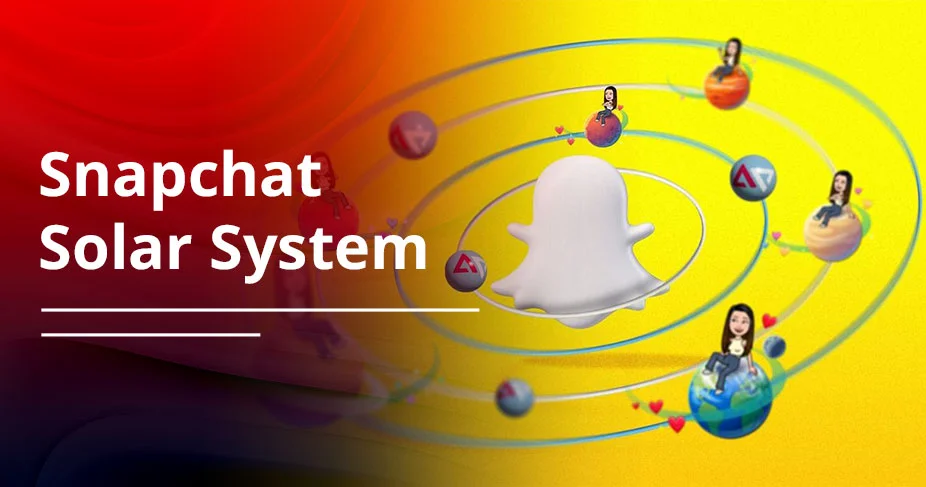
What is Snapchat Friend Solar System?
The Snapchat Friend Solar System is an exclusive feature for Snapchat+ subscribers that visually represents your friendship hierarchy using a cosmic theme . In this system, you are positioned as the Sun, and your top eight closest friends become planets orbiting around you, with each planet's distance representing your level of interaction and closeness .
This feature provides a more detailed view of your social connections compared to the classic Best Friends emojis, showing exactly where each friend ranks in your digital universe from closest (Mercury) to furthest (Neptune) . The planetary positions update regularly based on your interaction patterns, making it a dynamic representation of your evolving friendships.
To access the Friend Solar System, you need an active Snapchat+ subscription. The feature is now turned off by default for new subscribers due to its potentially sensitive nature, so you'll need to manually enable it in your Snapchat+ settings . Snapchat+ costs $3.99 per month with various subscription plans available .
Snapchat Planets Order and Meanings
The Friend Solar System follows the actual order of planets in our solar system, with each position representing a specific rank in your Best Friends list. Here's the complete breakdown of what each planet means in your Snapchat universe :
Your closest confidant and most frequent contact on Snapchat. This friend represents your strongest digital bond with the highest interaction frequency .
- Highest snap and chat frequency
- Longest maintained streaks
- Daily interaction patterns
- Mutual #1 position often
Your second-closest friend with very frequent interactions, just slightly less than your Mercury. A strong, meaningful friendship with consistent engagement .
- Very frequent snaps and chats
- Strong friendship bond
- Regular story interactions
- 80-90% of top interactions
A reliable, steady friend with consistent interaction. You maintain regular communication through snaps, chats, and story reactions .
- Regular snapping and chatting
- Consistent story engagement
- Strong but not top-tier bond
- 70-80% interaction frequency
A good friend with daily snap exchanges but less frequent chatting. Represents a solid connection that's still evolving .
- Daily snap exchanges
- Less frequent chatting
- Growing connection
- 60-70% interaction level
A close friend with daily snaps but only occasional reactions to stories. Maintains consistent but less intensive interaction .
- Daily snap exchanges
- Occasional story reactions
- Steady presence
- 50-60% interaction frequency
Mutual friends who exchange daily snaps but rarely chat or react to stories. Represents a more distant but maintained connection .
- Daily snaps maintained
- Minimal chatting
- Occasional interactions
- 40-50% engagement level
Occasional best friends who don't exchange snaps daily. Interactions happen periodically rather than consistently .
- Non-daily snapping
- Periodic interactions
- Casual friendship
- 20-40% interaction frequency
The friend you interact with the least among your top eight. Represents a distant connection with minimal engagement .
- Rare interactions
- Minimal snapping
- Distant connection
- Less than 20% engagement
How to Check Your Planetary Position
Checking your position in a friend's Solar System is straightforward once you have Snapchat+ enabled :
- Subscribe to Snapchat+ and enable the Solar System feature in settings
- Go to a friend's profile who appears in your Best Friends list
- Look for the "Best Friends" badge with a gold ring around it
- Tap on the badge to reveal which planet you are in their Solar System
- The planet shown represents your ranking in their Best Friends list
Remember that the Solar System is private and one-way - you can see your position in friends' systems, but they can't see their position in yours unless they also have Snapchat+ .
How to Improve Your Planetary Ranking
If you want to move up in someone's Friend Solar System, you need to increase your interaction frequency with them. Here are proven strategies to climb the planetary ranks :
- Maintain long snap streaks - Daily snaps for 100+ days significantly boost your position
- Chat consistently - Regular messaging beyond just snapping
- React to stories - Consistently view and react to their stories
- Send personal snaps - Individual snaps rather than group sends
- Reply quickly - Fast responses show high engagement
- Use voice and video calls - Snapchat calls increase interaction quality
The ranking algorithm typically updates every few days, so consistent interaction over time is key to improving or maintaining your position .
Privacy and Important Considerations
While the Friend Solar System can be fun and engaging, it's important to understand its limitations and potential impacts :
- One-way visibility - You can see your position in others' systems, but they can't see theirs in yours
- Not real-life reflection - Digital interaction doesn't always correlate with real-world friendship depth
- Optional feature - Now disabled by default to reduce potential anxiety
- Dynamic rankings - Positions change regularly based on recent interactions
- Mutual requirement - Both users must be in each other's Best Friends list to see planets
Snapchat introduced the opt-in requirement after feedback that the feature could sometimes cause discomfort when users discovered they weren't as close to friends as they thought .
Final Thoughts
The Snapchat Friend Solar System offers a unique, visual way to understand your digital friendship dynamics. While it can provide interesting insights into your social connections, it's important to remember that these rankings are based solely on interaction frequency within the app and may not reflect the full depth of your real-world relationships.
Used thoughtfully, the feature can be a fun way to stay connected with friends and understand your social patterns. Just remember that the most meaningful friendships often extend beyond digital metrics and snap counts.